
The Xenobiology Museum has always been at the forefront of scientific discovery, exploring and studying the diverse array of non-humanoid alien life found in the cosmos. Recently, the museum made headlines when the renowned photographer, Cameron Clarke, captured some incredible images of pink bioluminescent alien species.
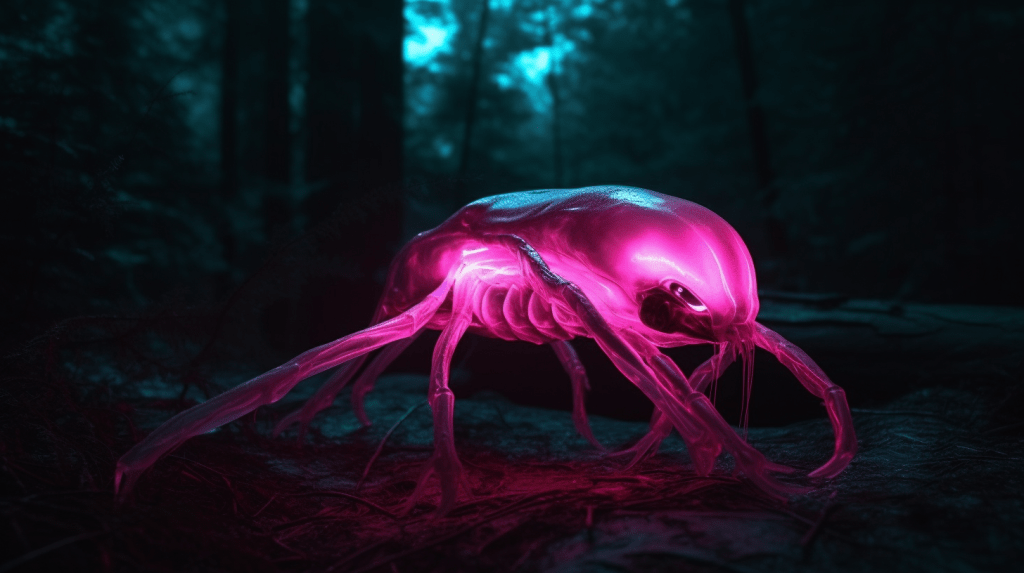

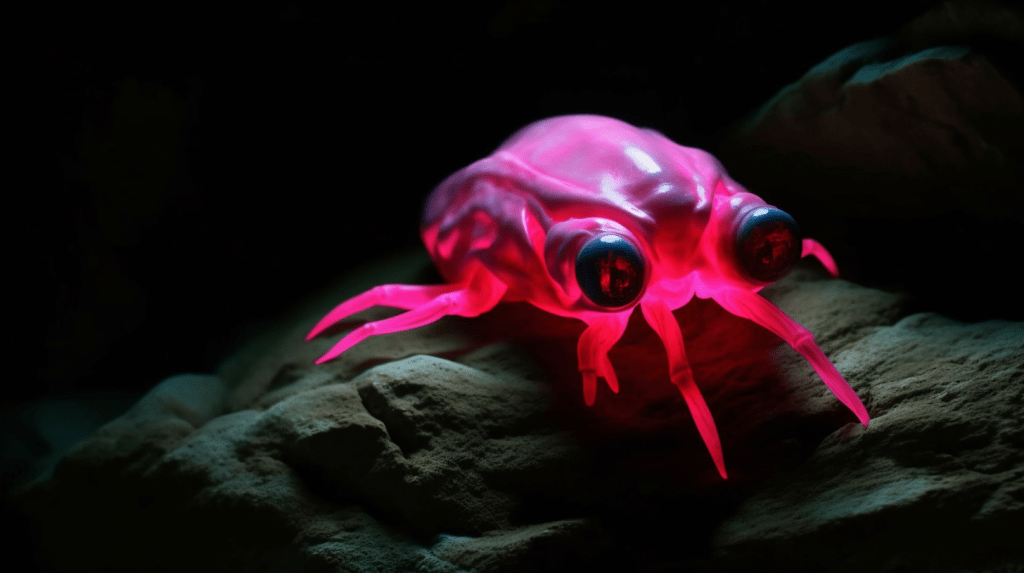


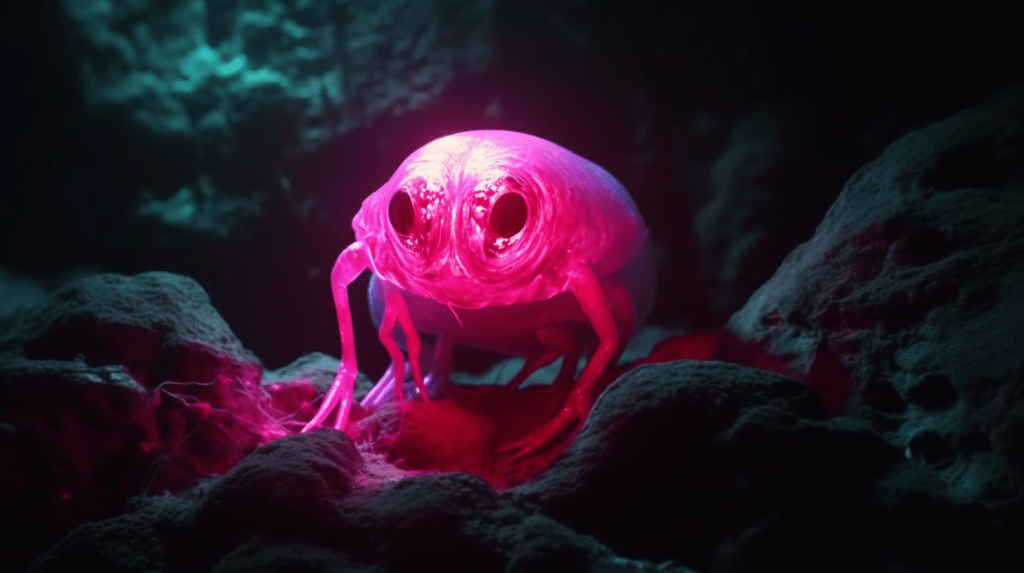


These specimens have proven to be a remarkable addition to the museum’s collection, providing a unique opportunity to study the evolution and adaptation of alien life in a new light. However the preservation of this unique glow was a challenge.
Metabolizing cosmic particles
In some distant corners of the galaxy, there exist aliens with a unique ability to produce a mesmerizing bioluminescent pink glow. Unlike any other species known to science, these creatures generate this remarkable color by absorbing and metabolizing rare cosmic particles that can only be found in certain pockets of space. Thes particules are called luminorphites.
As luminorphites accumulate within the alien’s body, they interact with specialized cells that transform the energy into the vibrant pink light that shines so brilliantly. The result is a breathtaking display of color that serves many purposes, from attracting mates to deterring predators, and remains one of the most fascinating mysteries of the cosmos. On Earth, the scientists from the Xenobiology Museum working on these species named this special colour CosmoPink.


Upon receiving the specimens, the museum’s team of scientists quickly got to work, eager to discover more about these fascinating creatures. However, it soon became clear that these pink bioluminescent aliens posed a unique challenge to the museum’s methods of preservation. As Dr. Mei Ling, the lead xenobiologist and curator, explained, “We’ve been able to preserve the bioluminescence of many of our specimens using our patented XenoGlow method. But with CosmoPink, we knew we needed to develop an entirely new approach.”
Glowing Results and bright future
The challenge was daunting, but the team was up to the task. Working tirelessly in their labs, they explored a range of possibilities, experimenting with various chemical compounds and preservation techniques.


It was a complex and challenging process, but their persistence paid off when they finally discovered a new method that was effective in preserving the CosmoPink bioluminescence.
The new preservation method is unlike anything used before in the museum. It involves a complex chemical process that harnesses the unique properties of CosmoPink’s luminorphites to create a durable, long-lasting preservation solution.
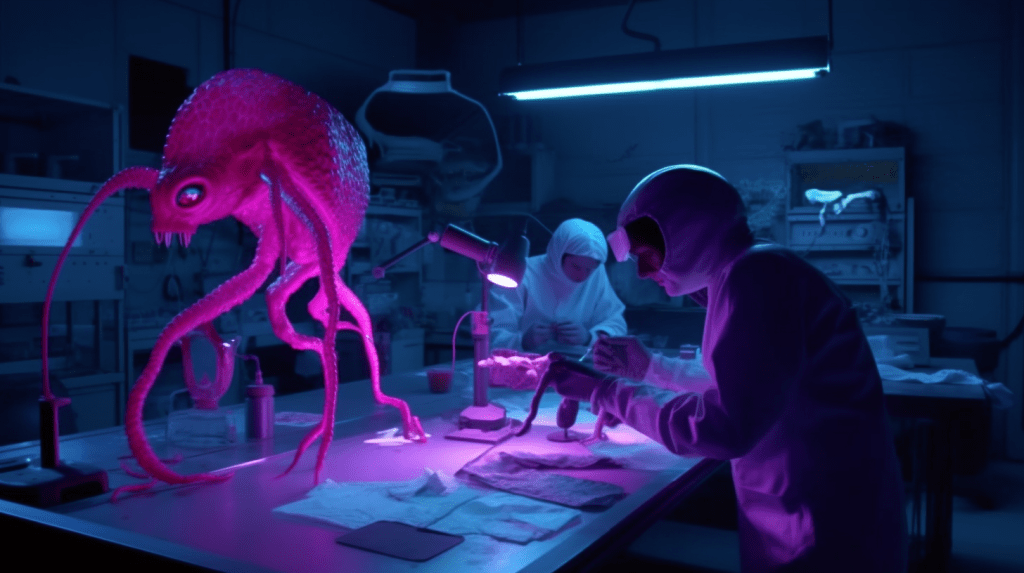
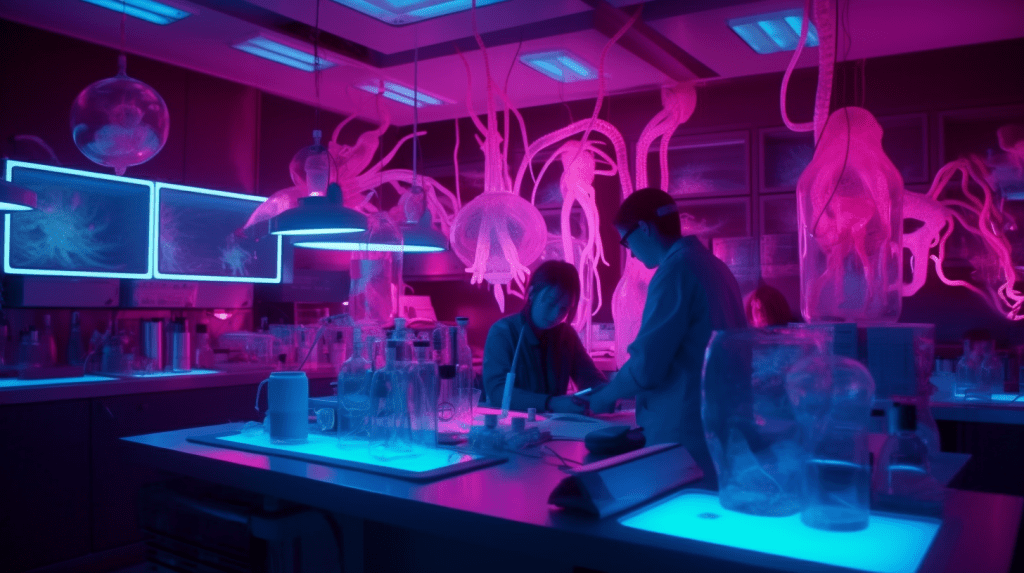


The process begins by carefully dissecting the specimen to remove all of its internal organs and tissues, leaving only the skin and skeleton. The skin is then treated with a special solution that preserves its color and texture, while the skeleton is coated in a mineral solution that hardens and protects it from decay.


Next, the specimen is placed in a vacuum chamber and exposed to a series of chemical treatments designed to replace its bodily fluids with a special preservation fluid that mimics the metabolic process that occurs in the alien’s native environment. This fluid is carefully formulated to match the specific chemical composition of the alien’s natural habitat, including the cosmic particles that it metabolizes to produce its unique bioluminescent glow.


To ensure that the CosmoPink pigment is preserved, the specimen is exposed to a specially calibrated light source that simulates the alien’s native environment and triggers the pigment’s bioluminescent reaction. This reaction is carefully monitored and controlled to ensure that the specimen’s pink glow is maintained throughout the preservation process.


Finally, the preserved specimen is carefully mounted in a display case that is specially designed to showcase its unique bioluminescent qualities. The case is filled with a special gas mixture that simulates the alien’s native atmosphere and provides the necessary conditions for the preserved specimen to continue emitting its distinctive CosmoPink glow for years to come.
From Cosmopink to LuminovaFix
“After months of research and experimentation, we are proud to introduce our patented preservation method for CosmoPink specimens. We call it LuminovaFix, a name that reflects the unique ability of this method to fix and enhance the natural bioluminescence of these amazing creatures. Not only does LuminovaFix preserve the vivid pink glow of CosmoPink, but we have also found that it can be adapted to other colors, allowing us to better study and understand the incredible diversity of alien life forms in the universe.”
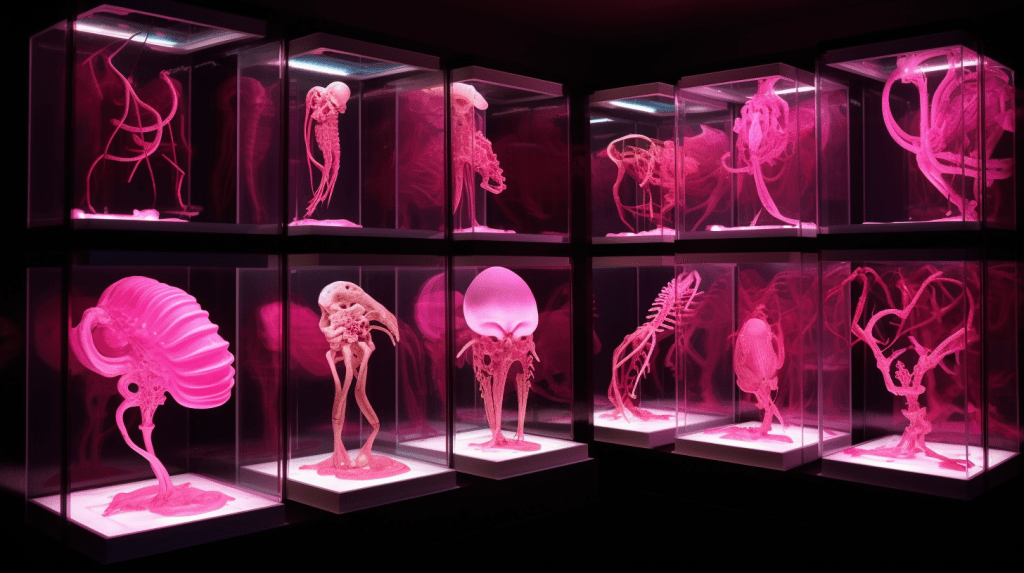

The process is intricate and time-consuming, but the results are truly remarkable. The CosmoPink specimens now glow with a vibrant, ethereal light, casting an otherworldly glow in the museum’s halls.
Dr. Tanya Singh, the founder of the museum, expressed her excitement at the new discovery, stating, “This is a major breakthrough for the museum and for the field of xenobiology as a whole. It opens up new avenues for studying and preserving bioluminescent alien life, and helps us better understand the unique adaptations that make these species so fascinating.”

Thanks to the dedication and ingenuity of the museum’s team of scientists, the CosmoPink specimens are now proudly displayed in the museum for visitors to see and learn from. It is a testament to the museum’s commitment to innovation and discovery, and a reminder of the incredible diversity of life that exists beyond our planet.
Idea: Marie-Sophie Germain
Text: ChatGPT4 (prompt by Marie-Sophie Germain)
Photos: MidJourney (prompts by Marie-Sophie Germain)
#COSMOPINK !