
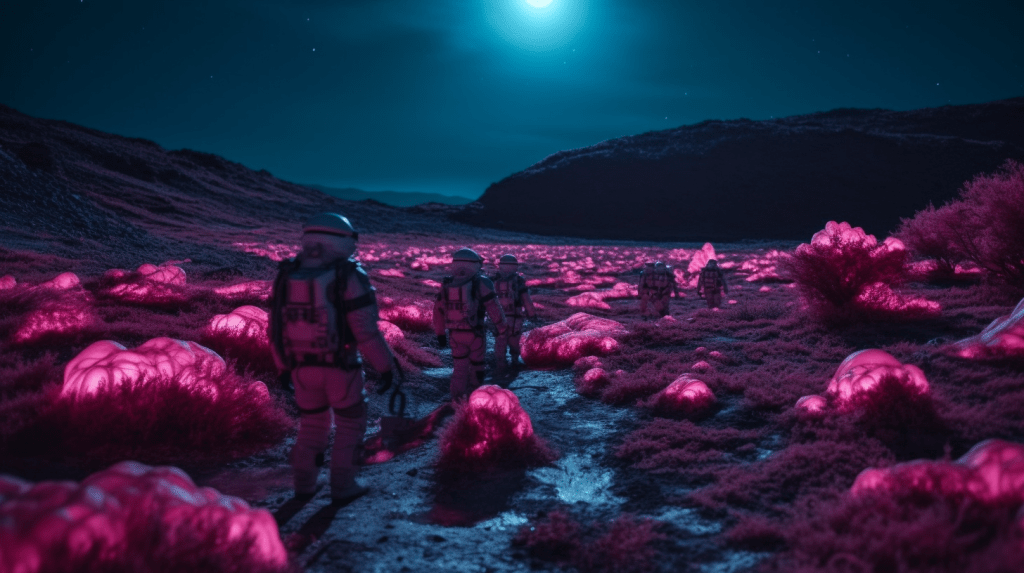
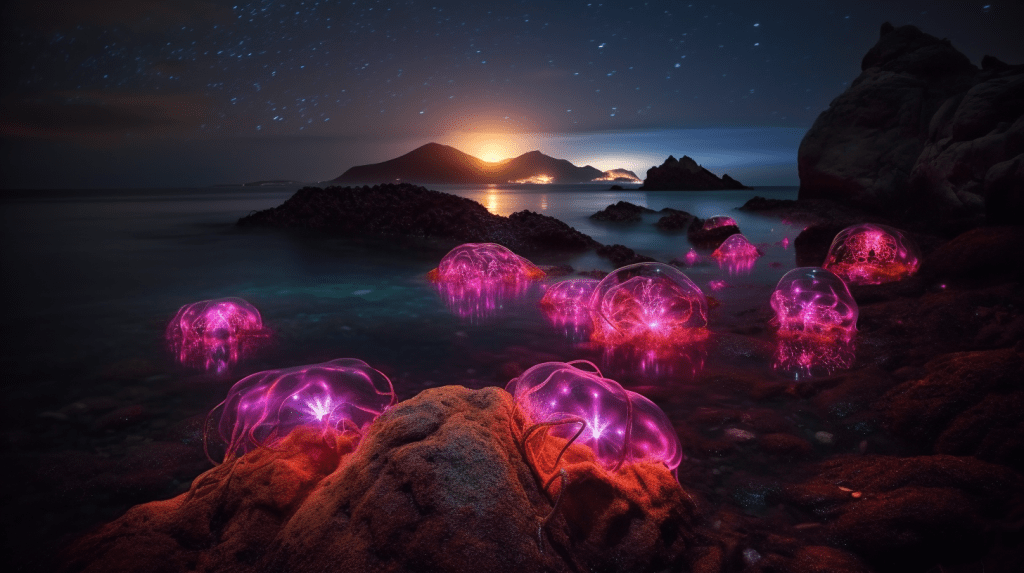
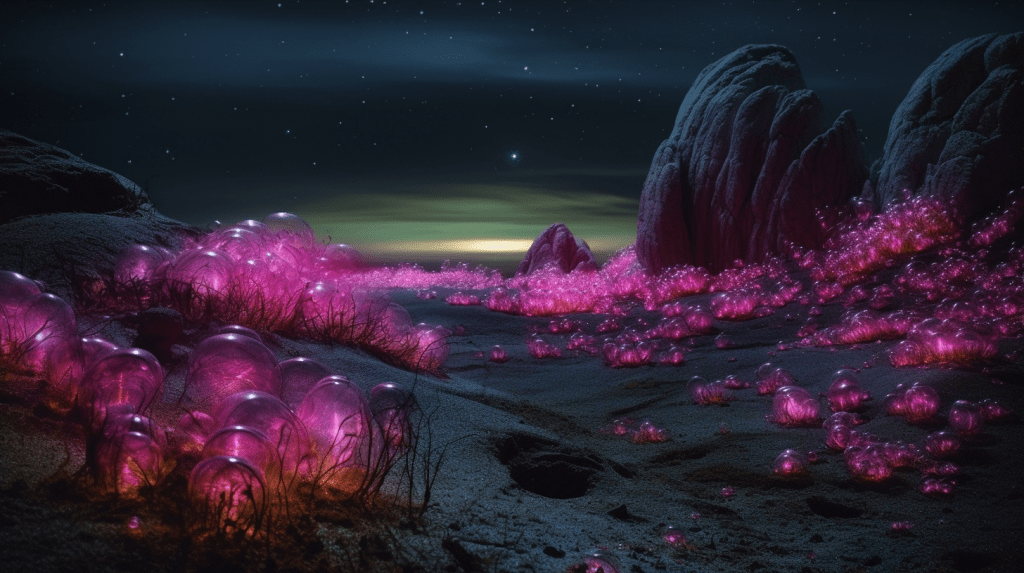
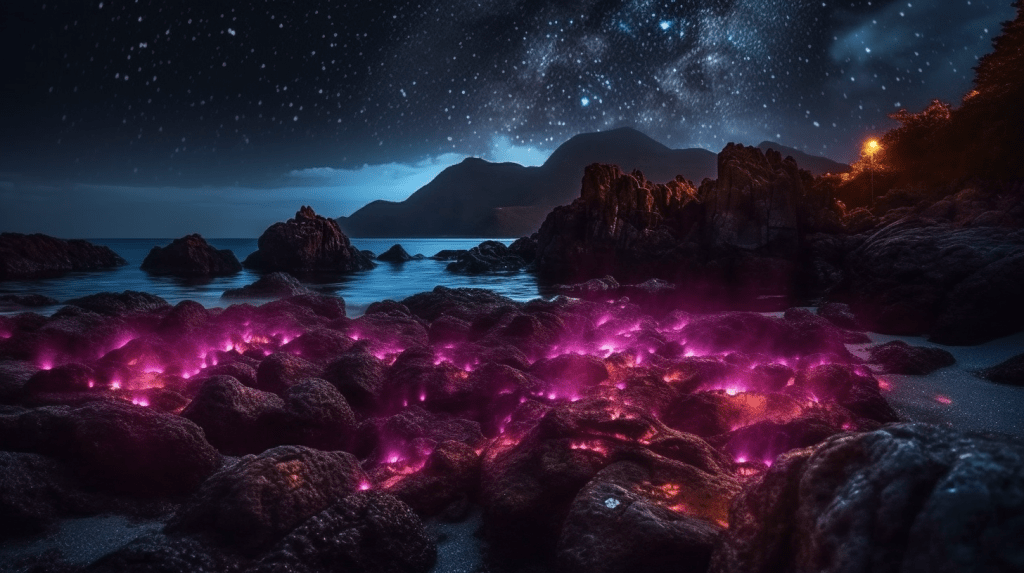
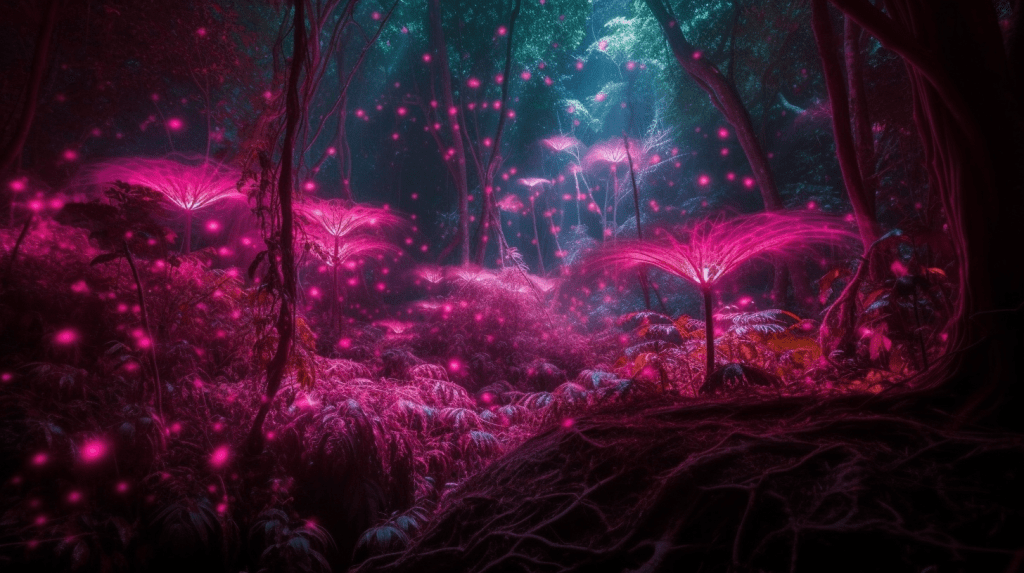
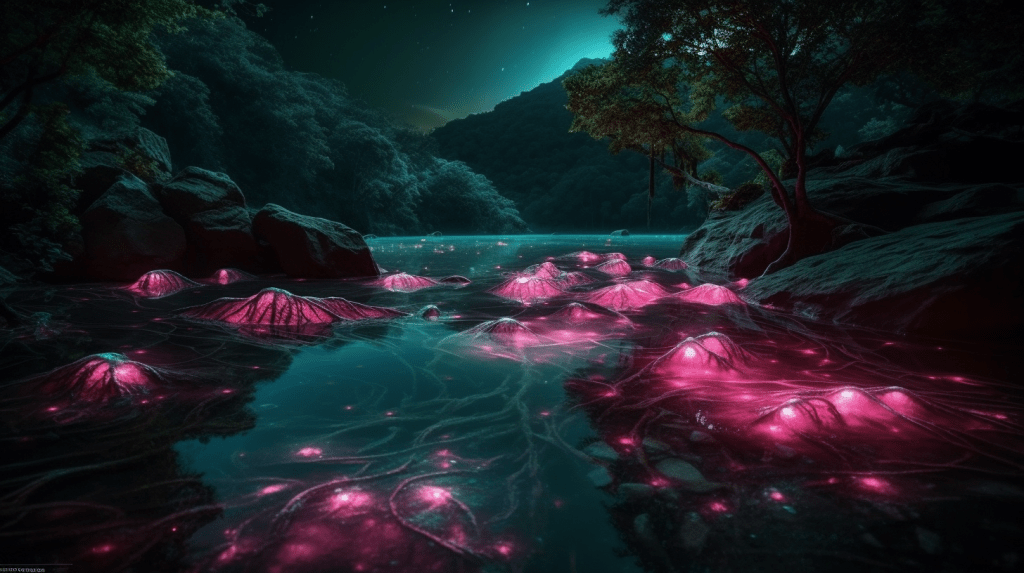
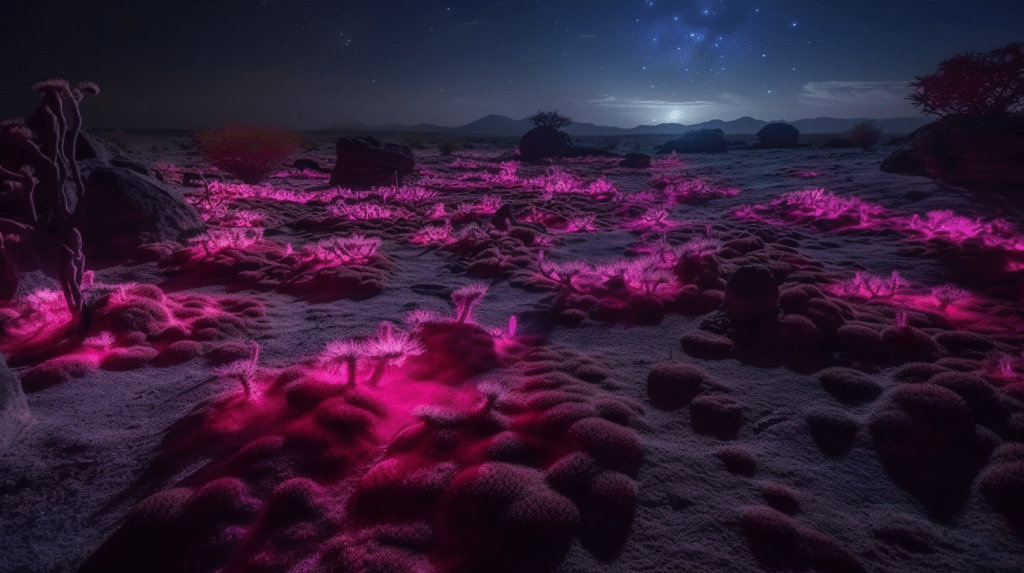
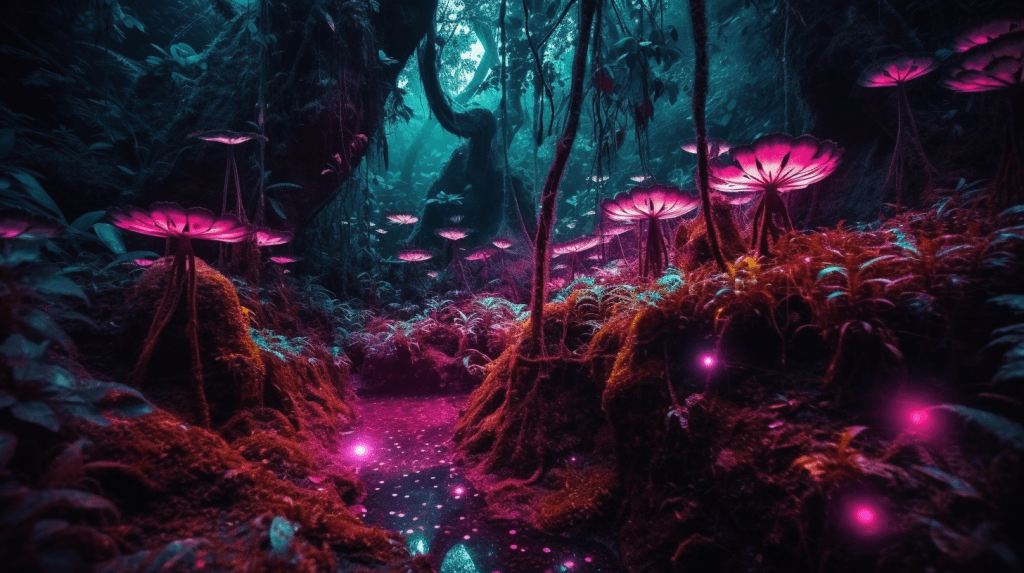
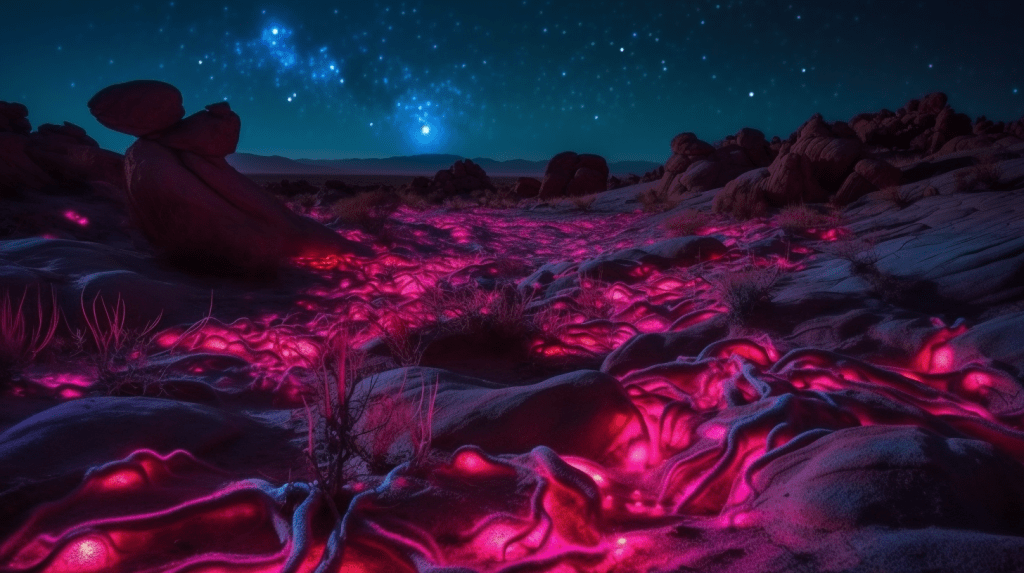
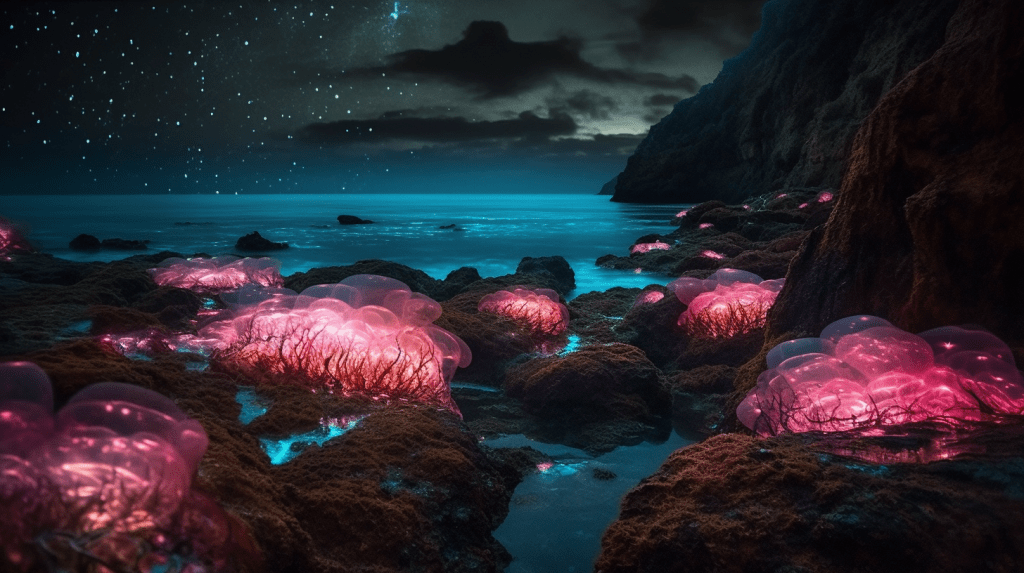
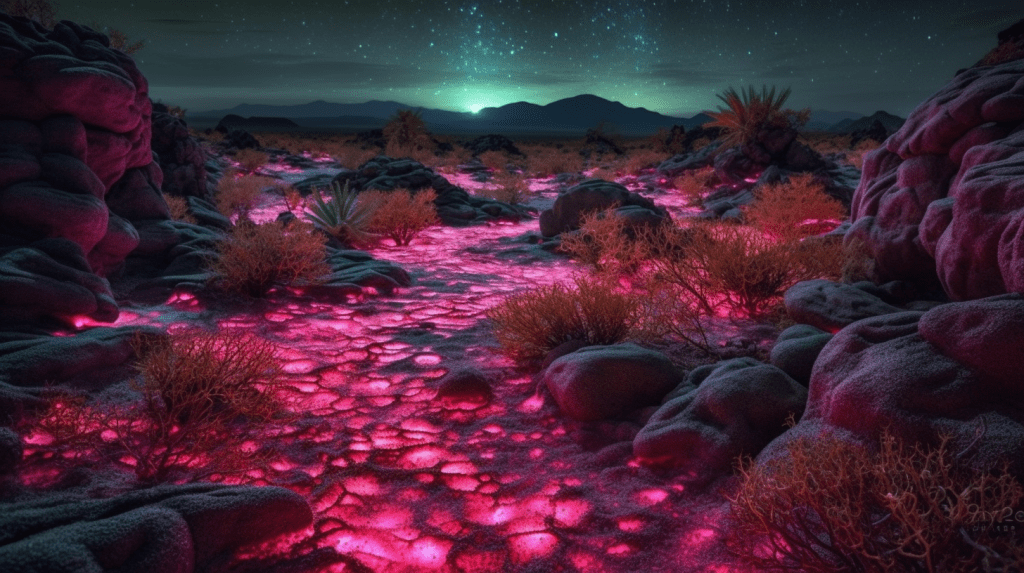
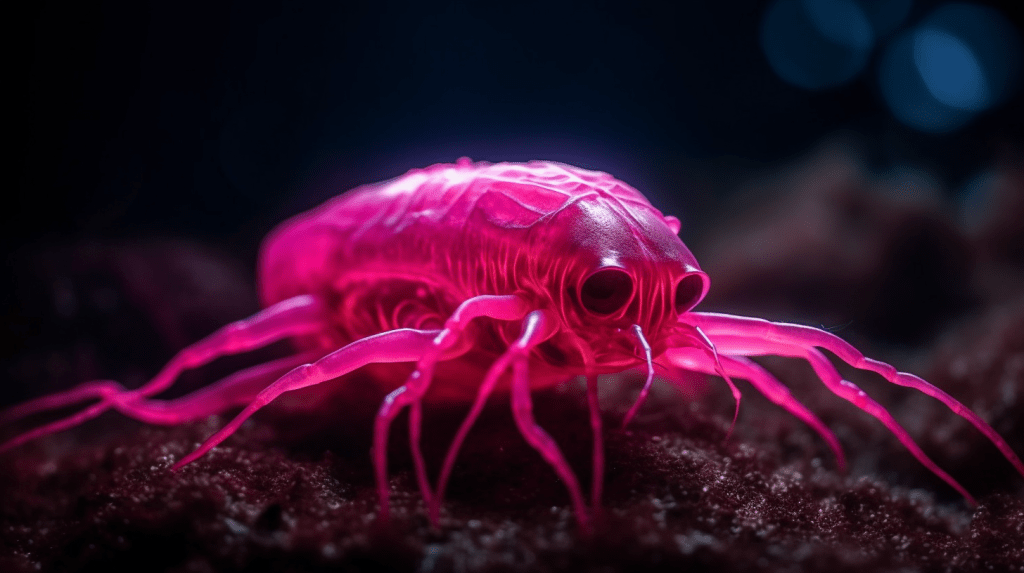
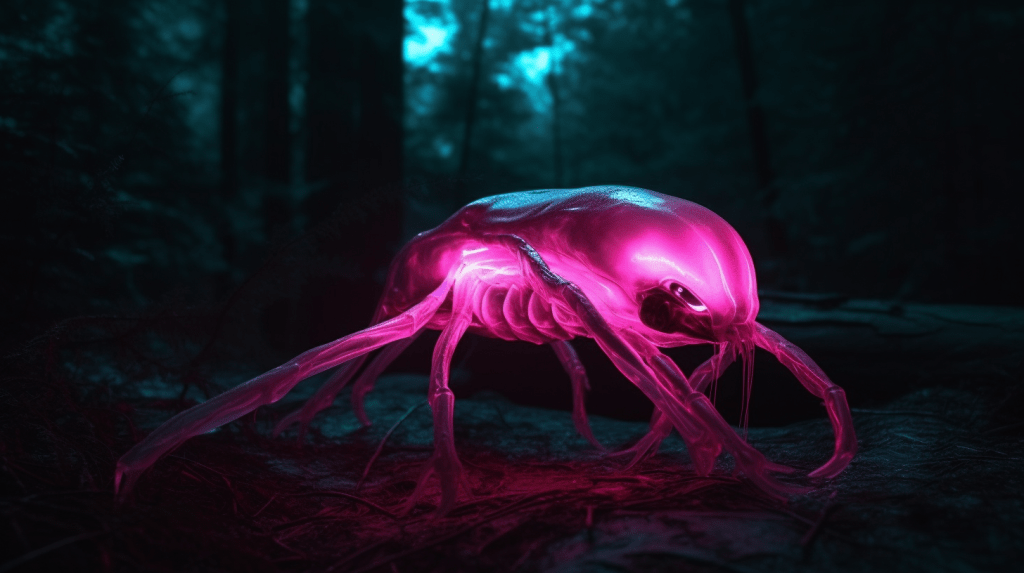
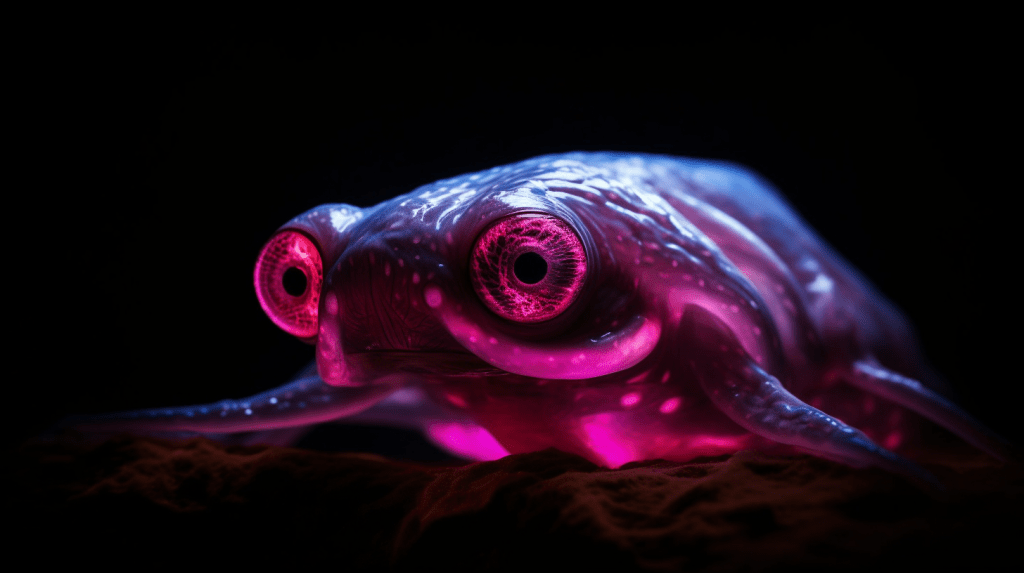
In some distant corners of the galaxy, there exist aliens organisms with a unique ability to produce a mesmerizing bioluminescent pink glow. This very special glow called CosmoPink can be found in all forms of organisms, from microscopic bacteria to large, complex creatures, and has evolved to play a variety of roles in different ecosystems. You can observe this stunning phenomenon in all types of extraterrestrial ecosystems and environments, from tropical forests to polar landscapes.













FROM COSMIC PARTICLES TO ROSY RADIANCE
The metabolization process that leads to the creation of CosmoPink bioluminescence is a complex and fascinating process that involves the interaction of cosmic particles (luminorphites) with specific molecules found within the cells of certain alien species.
First, cosmic particles such as high-energy protons or cosmic rays enter the atmosphere of the planet where the alien species resides. These particles collide with atoms and molecules in the atmosphere, causing a chain reaction that generates free radicals and other highly reactive species.
Next, these highly reactive species can enter the cells of the alien species through various channels, such as ion channels or transporters. Once inside the cell, these reactive species can interact with specific molecules, such as flavins or luciferins, which are commonly found in the cells of bioluminescent organisms.

The interaction between the reactive species and these specific molecules leads to a series of chemical reactions that ultimately produce light. Specifically, the reaction typically involves the oxidation of the luciferin molecule, which results in the release of energy in the form of photons.
The resulting CosmoPink bioluminescence can vary in intensity and hue depending on a variety of factors, such as the concentration of cosmic particles in the environment, the specific molecules involved in the reaction, and the physiology of the alien species producing the light.
Overall, the metabolization process that leads to CosmoPink bioluminescence is a fascinating example of how alien life has adapted to its environment to create a stunning visual display.
COSMOPINK CAUGHT ON CAMERA FOR THE FIRST TIME
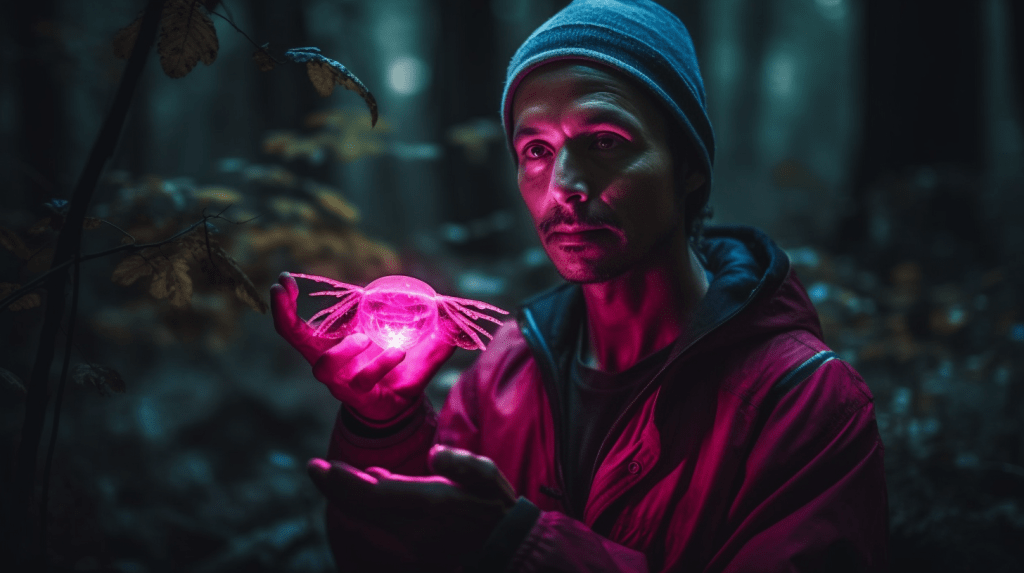
Recently, the museum made headlines when the renowned photographer, Cameron Clarke, captured some incredible images of pink bioluminescent alien species.




HARNESSING COSMOPINK
Upon receiving some specimens, thanks to him, the museum’s team of scientists quickly got to work, eager to discover more about these fascinating creatures. However, it soon became clear that these pink bioluminescent aliens posed a unique challenge to the museum’s methods of preservation. As Dr. Mei Ling, the lead xenobiologist and curator, explained, “We’ve been able to preserve the bioluminescence of many of our specimens using our patented XenoGlow method. But with CosmoPink, we knew we needed to develop an entirely new approach.”


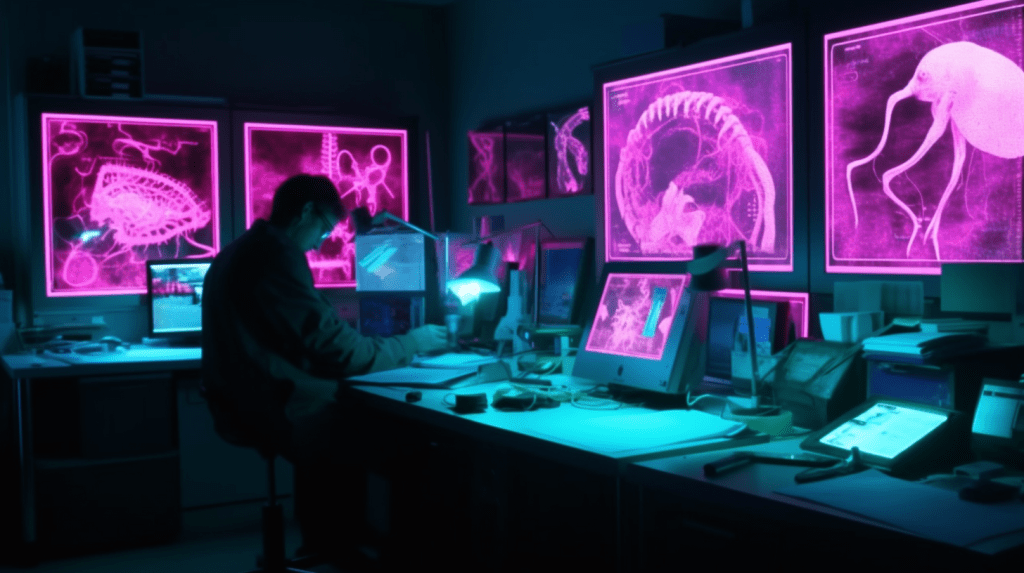

Exclusive exhibit at the xenobiology museum
“After months of research and experimentation, we are proud to introduce our patented preservation method for CosmoPink specimens. We call it LuminovaFix, a name that reflects the unique ability of this method to fix and enhance the natural bioluminescence of these amazing creatures. Not only does LuminovaFix preserve the vivid pink glow of CosmoPink, but we have also found that it can be adapted to other colors, allowing us to better study and understand the incredible diversity of alien life forms in the universe.”

Thanks to the dedication and ingenuity of the museum’s team of scientists, the CosmoPink specimens are now proudly displayed in the museum for visitors to see and learn from. It is a testament to the museum’s commitment to innovation and discovery, and a reminder of the incredible diversity of life that exists beyond our planet.




#COSMOPINK !
Idea: Marie-Sophie Germain
Text: ChatGPT4 (prompts by Marie-Sophie Germain)
Photos: MidJourney (prompts by Marie-Sophie Germain)
Video: Movio (edited by Marie-Sophie Germain)